













Stoffa the designer Part 2: The clothes
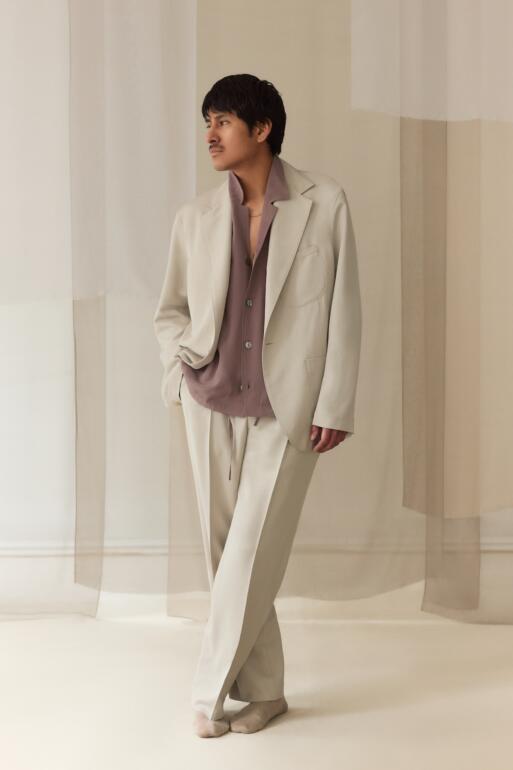
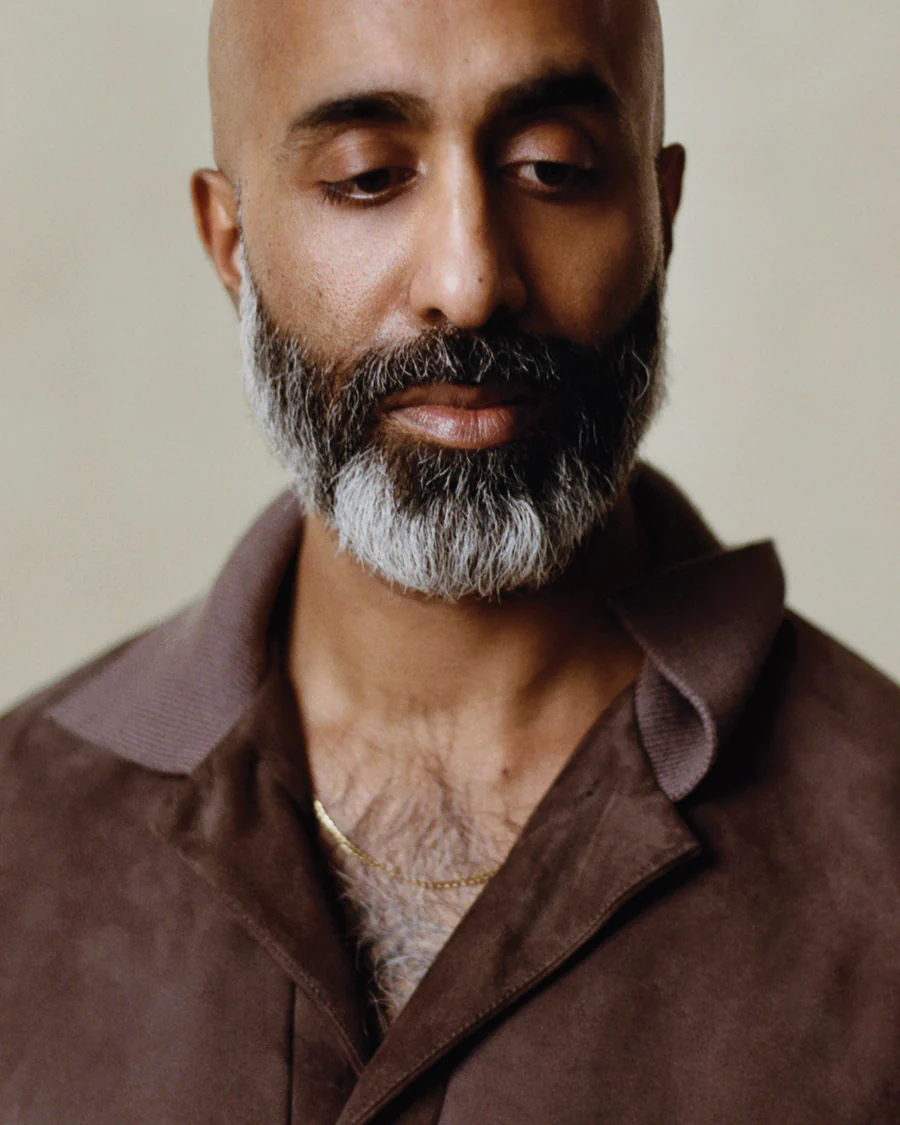
Last week, I wrote about why Stoffa is my favourite designer brand. They’re a designer to the extent that they create less-classic garments, and are design (particularly fabric) led. Yet they also have many of the characteristics that we value on Permanent Style, such as quality, craft and authenticity.
That was more of an opinion piece. Today I’m going into more product detail, using a try-on session I had with Agyesh (Madan) and Nick (Ragosta) to talk about what makes a few pieces special, and also revealing about Stoffa.
I hope you find it a useful extension, and nice geeky detail for all you product lovers. Note that the pieces are deliberately from a range of seasons, so some of them aren’t currently online (I’ve linked to the ones that are). But the ones that aren’t are available made to order.
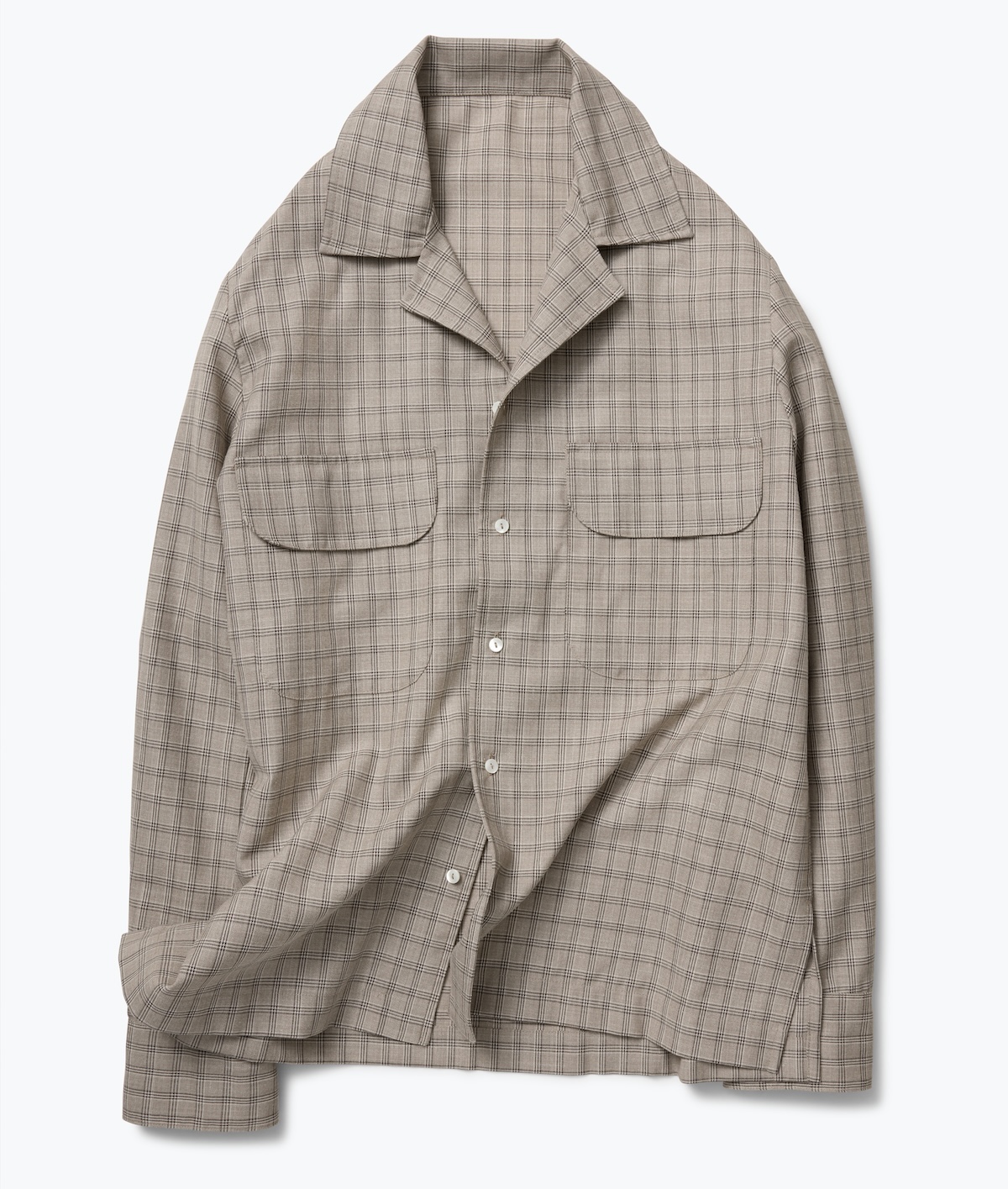
Taupe wool/silk/linen
This piece is a good example, for me, of the use of made to measure at Stoffa. I love the style of this shirt, and the unique material, but when I tried it on the length was too short and the body too A-line. This is often the case on roomier shirts, as I’m slimmer than average for my chest size, and taller.
Unlike elsewhere, however, I could have one made to measure and add both a little bit to the length and take in the body. Interestingly, Nick said people actually sometimes have these shortened, because they want a bigger look – they go up a size or two for that really loose, 90s style, but don’t want the length down to their knees.
It’s also interesting that made to measure is being used here not to achieve precision – as you generally do with tailoring – but to create a different style, a different expression of the piece.
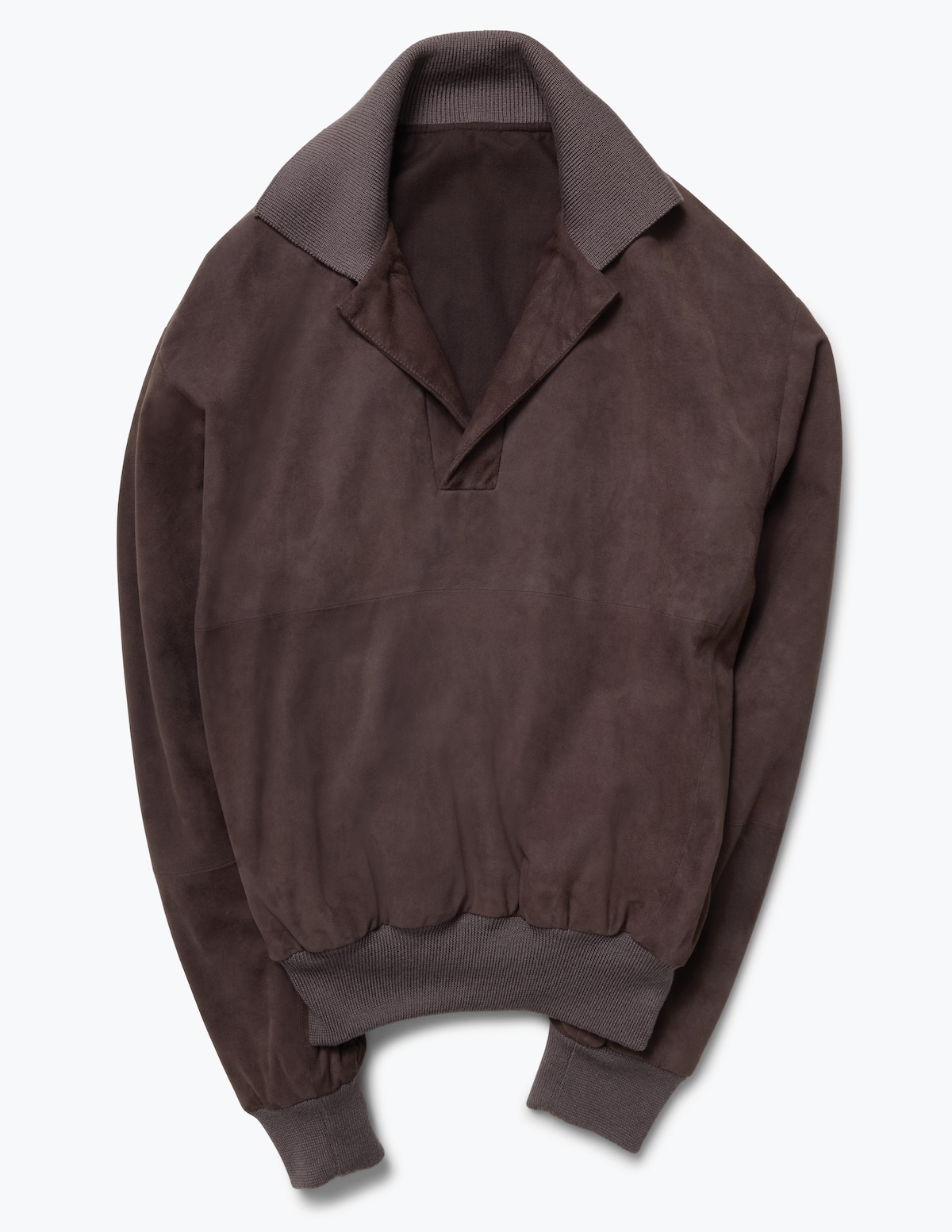
Suede popover
Fig suede
This popover is most useful as an illustration of what constitutes Stoffa style. But the materials are revealing too.
Regular readers will know I have an Hermes popover that I adore. But despite its orange colour, that piece is more classic than this Stoffa version. The Stoffa piece has a larger collar, a deeper opening, no buttons and a blousier fit, combining to make it showier/sexier/more expressive.
That style goes across the Stoffa range (the knit polos are similar – bigger opening, no buttons) and it’s something you shouldn’t really try and change with made to measure (a mistake I talked about in part one). But it doesn’t mean other pieces won’t be for you – I might not wear the popover, but I would wear the polo for instance, or the shirts, which also have a bigger collar.
On materials, our conversation revealed a lot of the work and thought process that goes into these. “We wanted the lining to be soft enough to wear against the skin, but also slippy enough to get on and off easily,” said Nick. “You want it breathable, so it doesn’t get too sweaty, and also not too heavy; you can’t use yarn of 200g or more as it ruins the point of having lightweight suede. It took a while to find the right one, but we got there.”
Most brands would just pick a standard lining (I know, I’ve been in those conversations) and they certainly wouldn’t use a wool/silk for the ribbing.
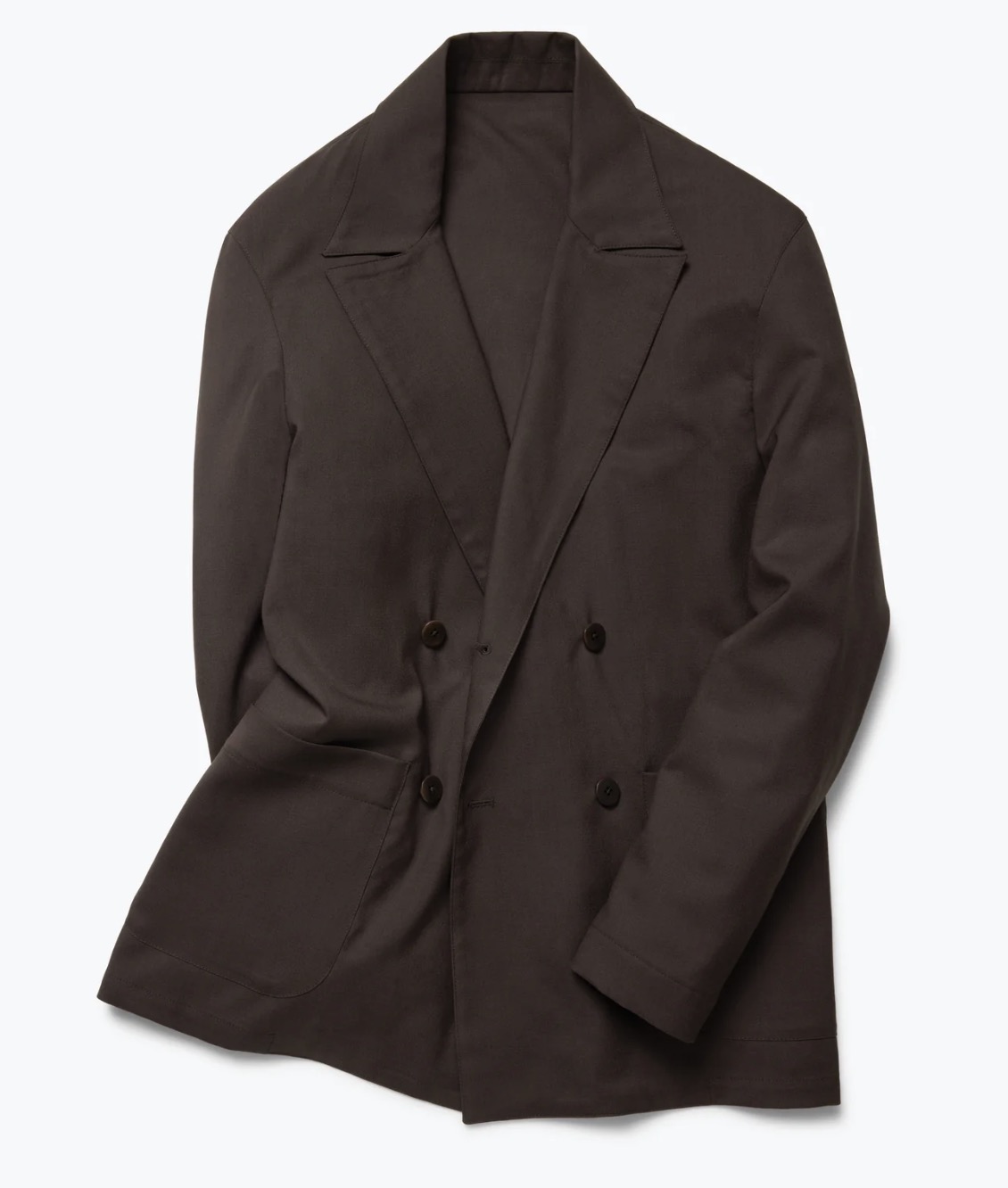
Chocolate tropical wool
As you’d expect, this is one I found particularly interesting because it was closest to tailoring. Talking to Nick and Agyesh about it, however, they emphasised the shirt side of things, as well as how materials can make two very different versions.
“We call it a shirt jacket deliberately,” said Nick. “Yes it’s shown in an elegant way, but it’s not that idea you have in your head of a tailored jacket. It has no side panel, no darts, and is completely unlined. It’s made like a shirt.”
And yet, this is the first thing I’d want to have made to measure, because the style is as complicated as a jacket – the length, the volume, where the waist sits. A shirt is an easy thing to tweak remotely, but a jacket is more complicated. Apparently most agree, because most of these shirt-jackets are ordered MTM, in store.
The second point was that the design is done that way to fully express certain fabrics. A wool is picked because it’s soft and fluffy, whereas a particular wool/silk is chosen because it’s slippy and has a lot of lustre. A lot of the point of the garment is about the fabric, which is not the way round we’re used to thinking about things.
This is actually a problem I know readers have when they commission things such as overshirts from tailors. They use tailoring materials, because that’s what’s available, but those materials are not always suited to something completely unstructured. It’s an area where design-led brands are nearly always better.
Raglan coat
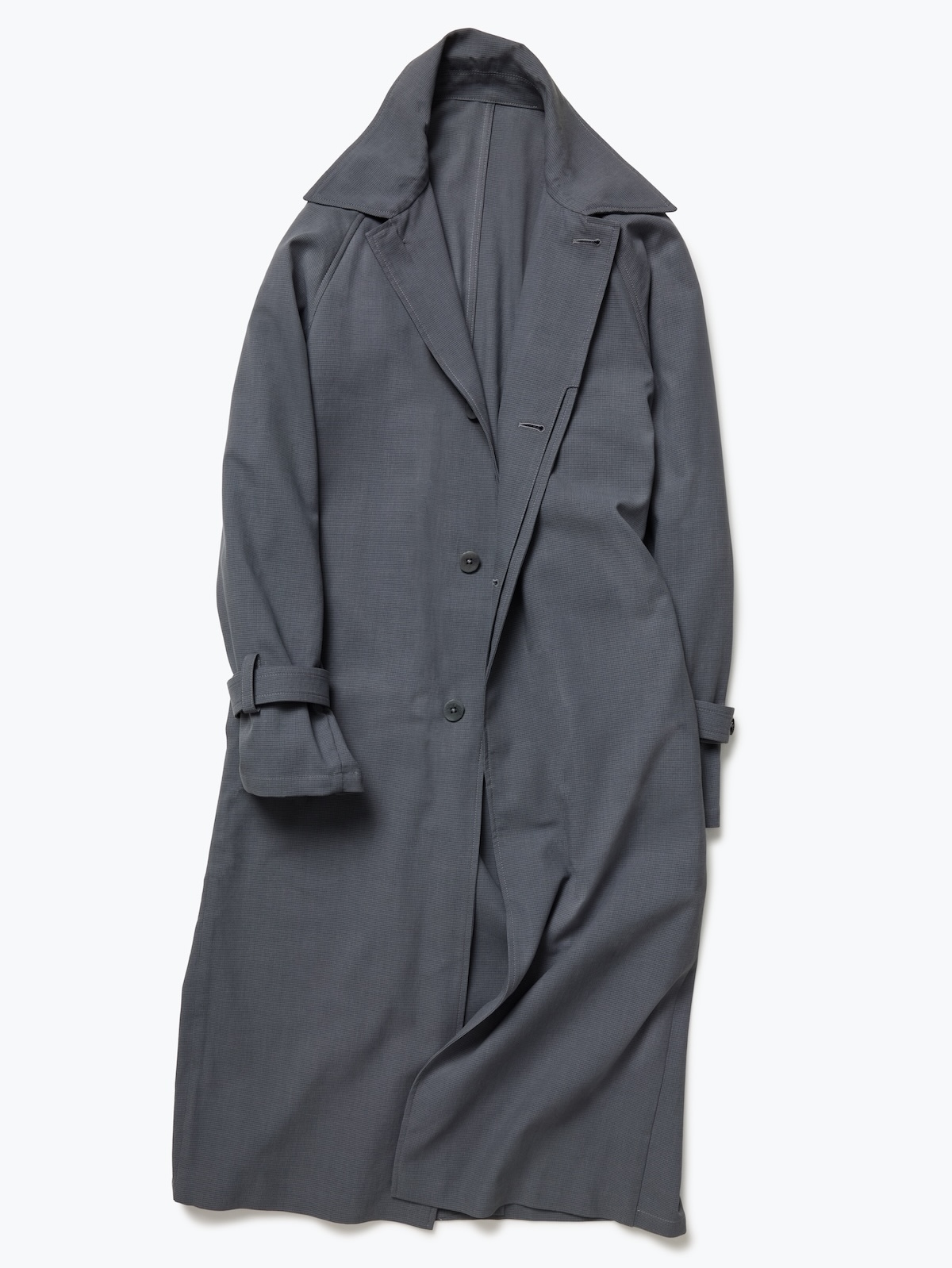
Anthracite silk/cotton/linen
If a coat isn’t that warm, and it isn’t waterproof, what’s the point? I know it’s a question that readers think (and ask) fairly frequently. The answer I think, as with this coat, is style. During in-between seasons, some people prefer a three-quarter length piece like a field jacket, while others prefer something longer.
In fact, London is the kind of place where an in-between coat is most useful – where it can be cold in the morning but warm in the afternoon; where you often have to layer; where there is more likely to be brief showers than the storms you get in New York. This week has been rather like that in London actually.
It was also interesting talking to Agyesh about waterproofing, as it’s a nuanced topic that often just gets reduced to ‘Is it waterproof?’. He doesn’t use treatments, but he picks materials that are more water resistant – it makes a big difference if the material is a tighter weave, a slightly brushed finish, wool rather than cotton and so on. Those kinds of things mean the water doesn’t penetrate the material instantly, and so create natural resistance.
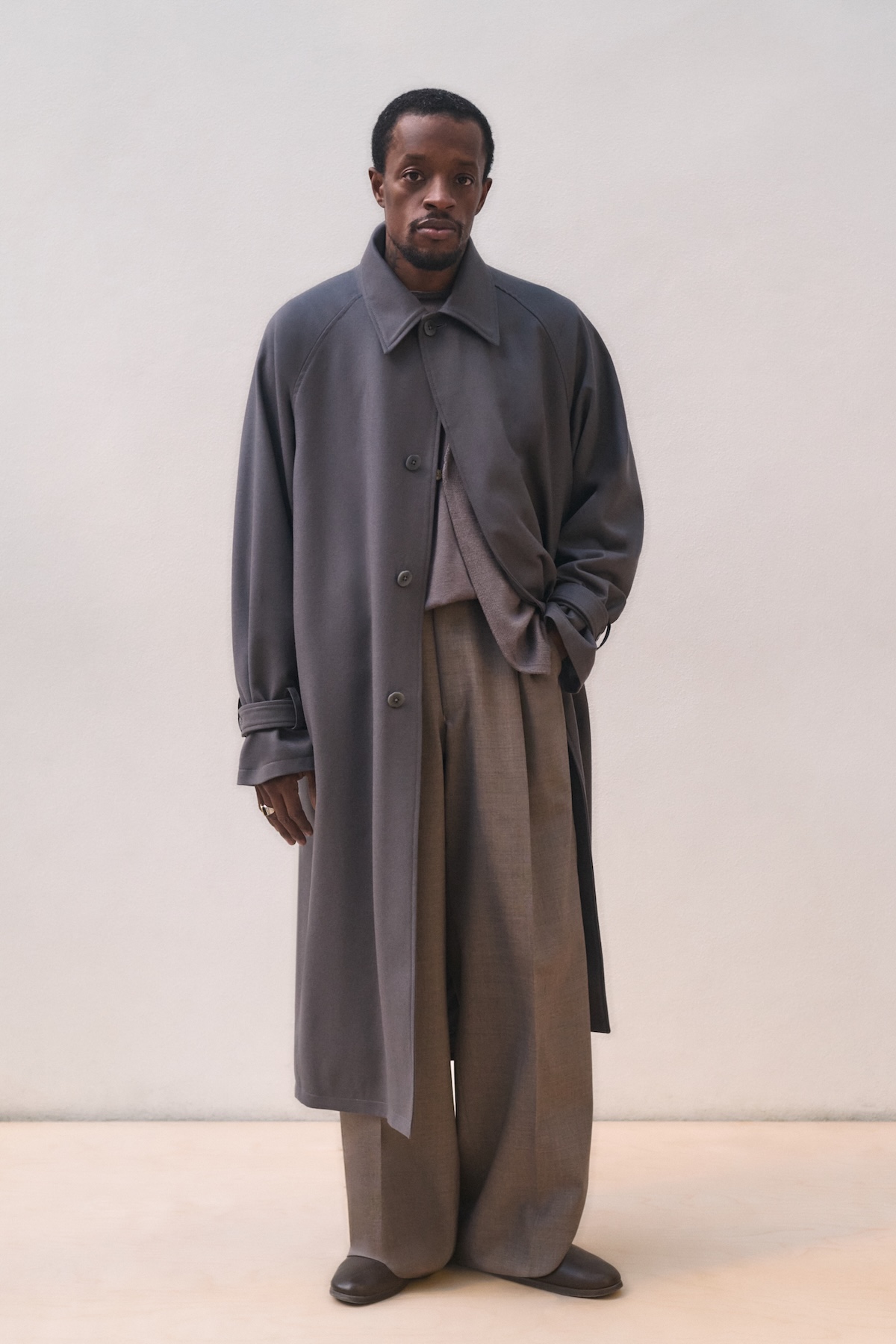
Lastly, I don’t own any of the current pieces above, but I do have several I wear a lot, so for greater context those are:
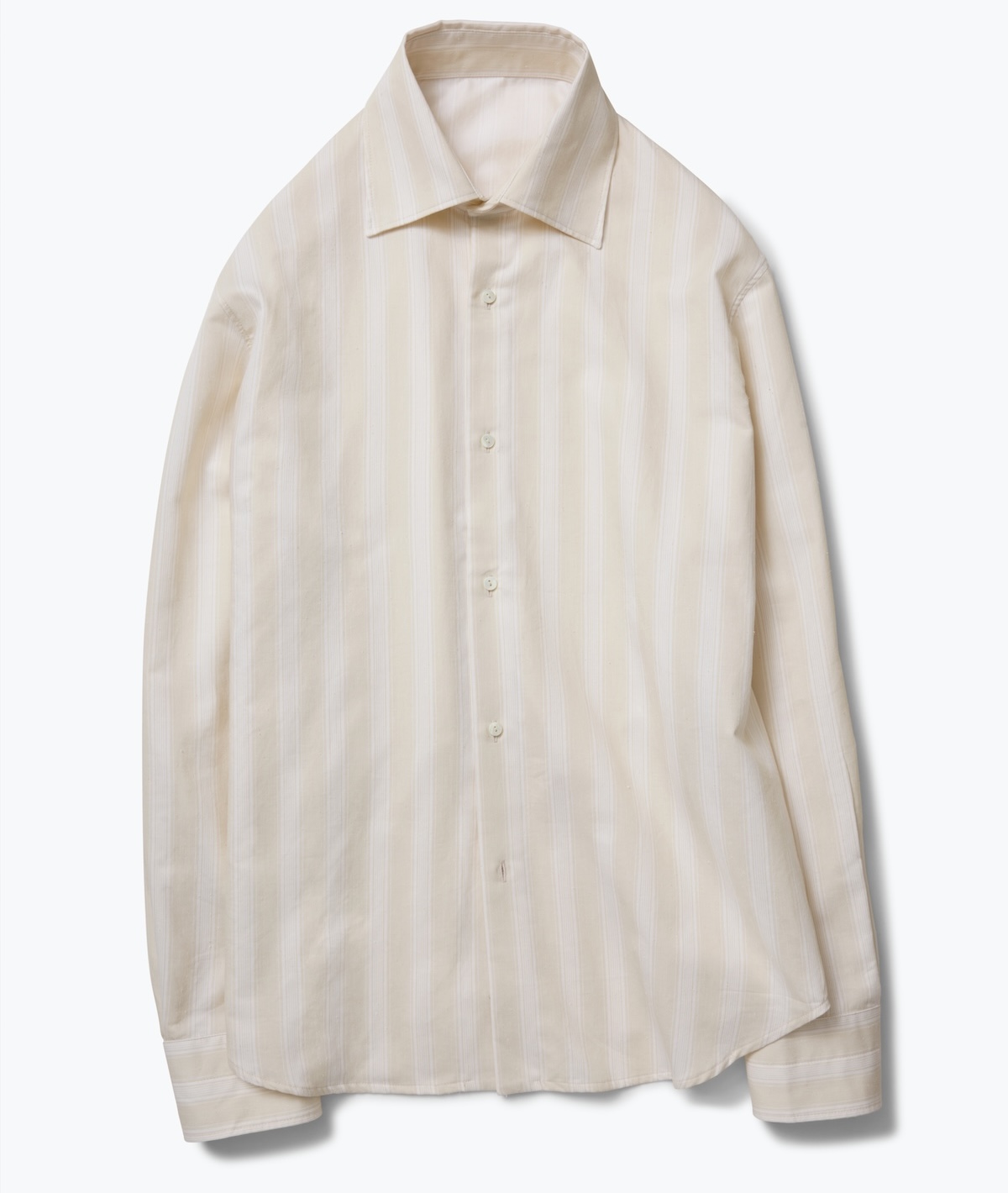
- Spread collar shirt in cotton/silk slub (sand with ivory)
- Available MTO, or in other models/colours
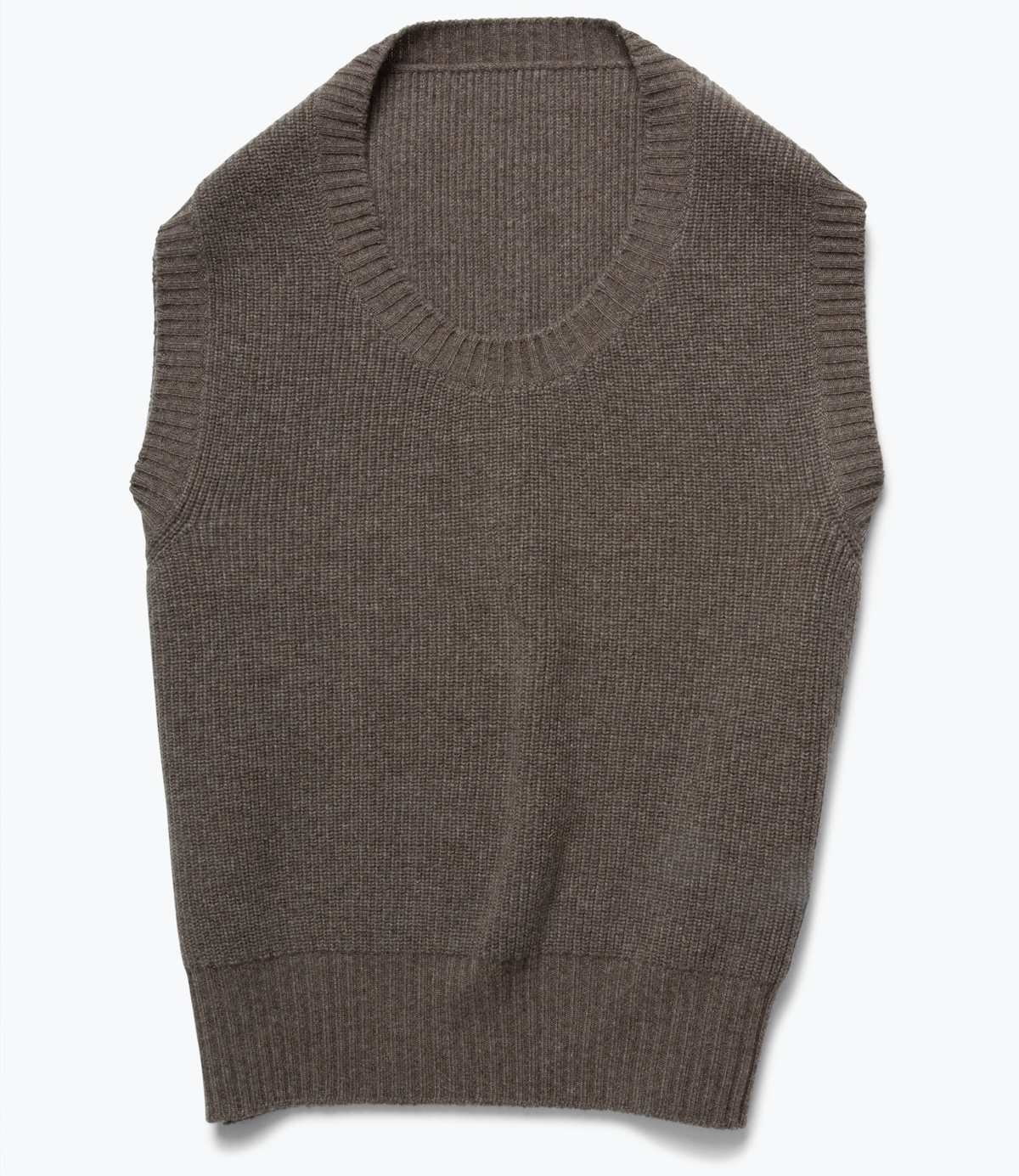
- U-neck vest in cashmere (walnut)
- Currently available in cotton but not cashmere
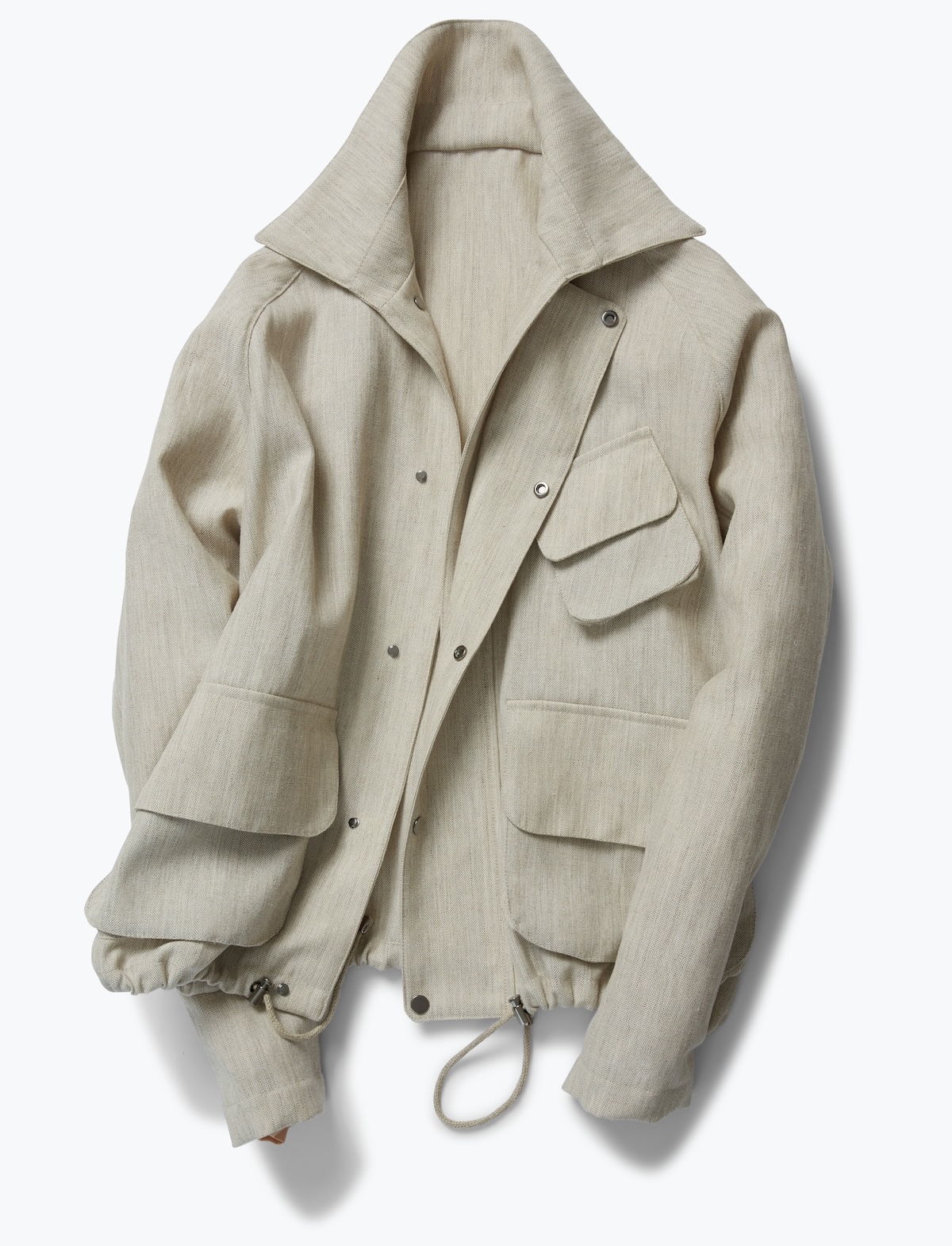
- Field blouson in wool/hemp (sand)
- Available made to measure in different materials
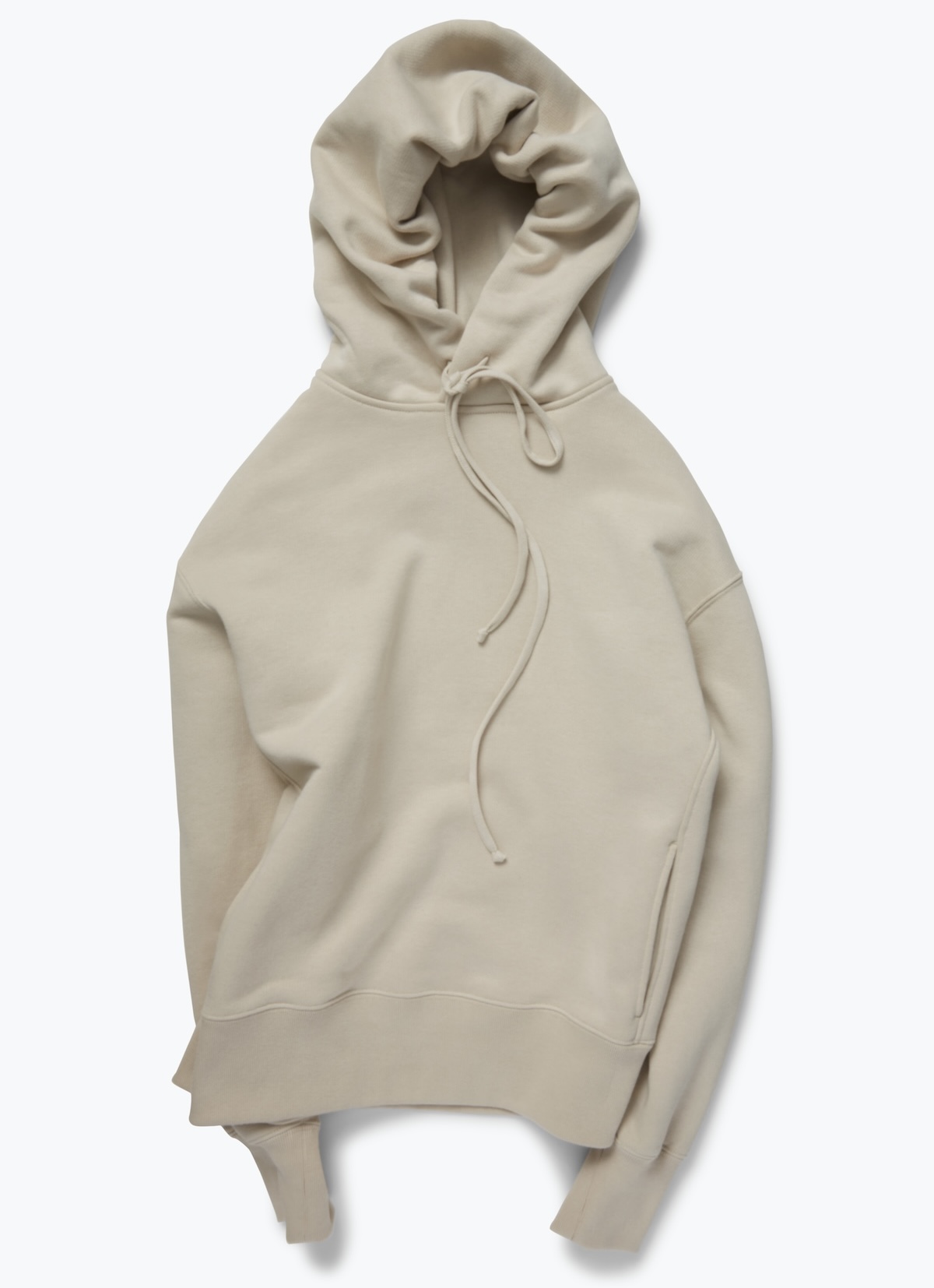
- Hooded sweatshirt in cotton terry (bone)
- No longer offered
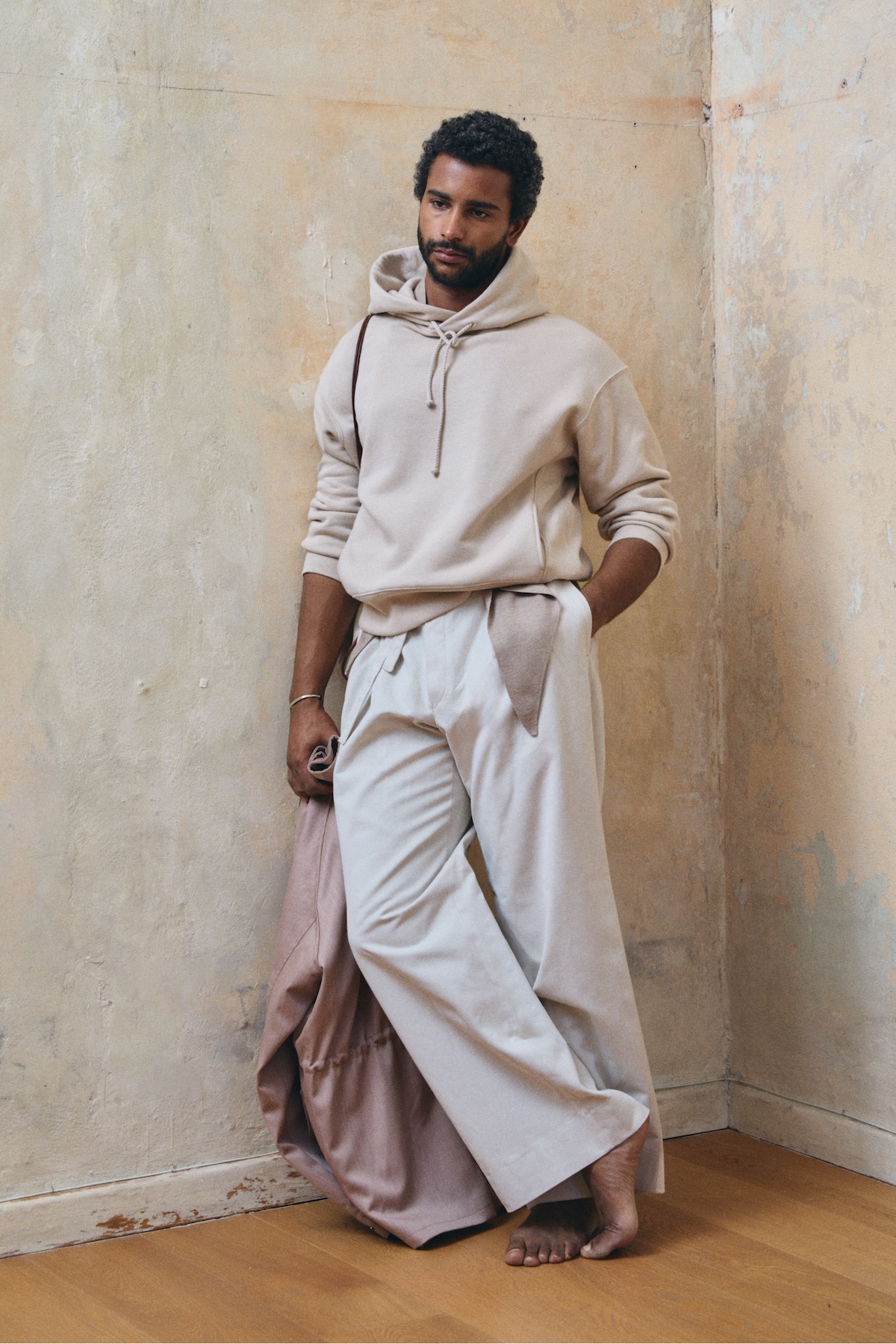
They are all pictured below. If anyone has any other questions about these or other pieces, let me know and I can try to answer from this experience, or push them onto Nick and Agyesh.